

Six group sessions on Tuesdays at Casa Corah, one private lesson with Carolina, and a recorded closing session — yours to keep. 8 to 10 spots per edition.
"For 17 years, I kept quiet. I didn't know what I was losing. The day I started singing again, something shifted permanently."Carolina Araoz — Founder of Casa Corah
It is a structured artistic process, where voice, listening and harmony develop through ensemble work — learning to blend, to listen, and to find your place in the sound. A boutique vocal ensemble for people who feel music deeply.
"Singing in a group raises dopamine and serotonin levels — the same neurochemicals released during other pleasurable social activities."
University of Oxford — Dept. of Experimental Psychology"Group singing was found to improve wellbeing more than other leisure activities, including sport, crafts, and solo music-making."
Oxford & University of Queensland Joint Study"Singing in a group produces greater improvements in mood, stress, and sense of belonging than listening to music alone."
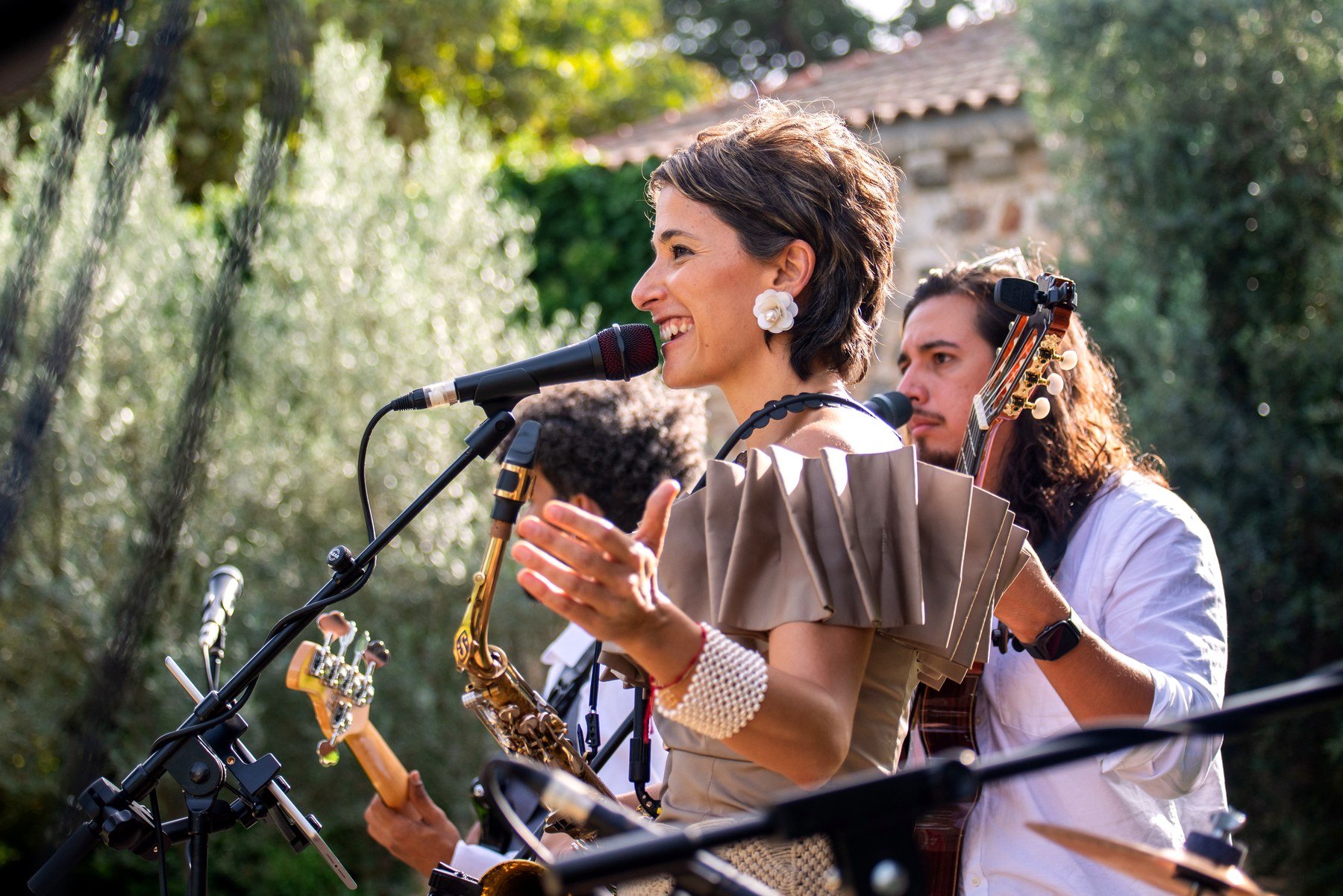
British Academy of Sound TherapyMusician, composer, saxophonist, and artistic director with over 30 years of experience in vocal and ensemble work. Trained at the University of North Texas (UNT) and Berklee College of Music. Founder of Jazz Jaus — a pioneering youth music project that ran for 18 years and left a lasting mark on Peru's musical culture. Mentored by Susana Baca for nine years.
She has performed at international stages including BBC London, the Valencia Jazz Festival and EXIB Festival Portugal.
Her students don't just remember the music. They remember what shifted in them.
Her full story — 30 years, Lima to Madrid →
You work as an ensemble — breath and vocal ease, harmony and listening, rhythm and blend. Technique here is never abstract. It's built step by step, inside the sound the group creates together.
Voice lives in the body. Before you sing, you learn to stand in it — posture, breath, presence, the ease of being seen. Quiet, physical work — the groundwork that makes performing feel natural.
You help shape the repertoire from a curated list, then build it together — session by session. Group songs and, if you choose, a personal one — everything comes together in the closing session, recorded for you to keep.
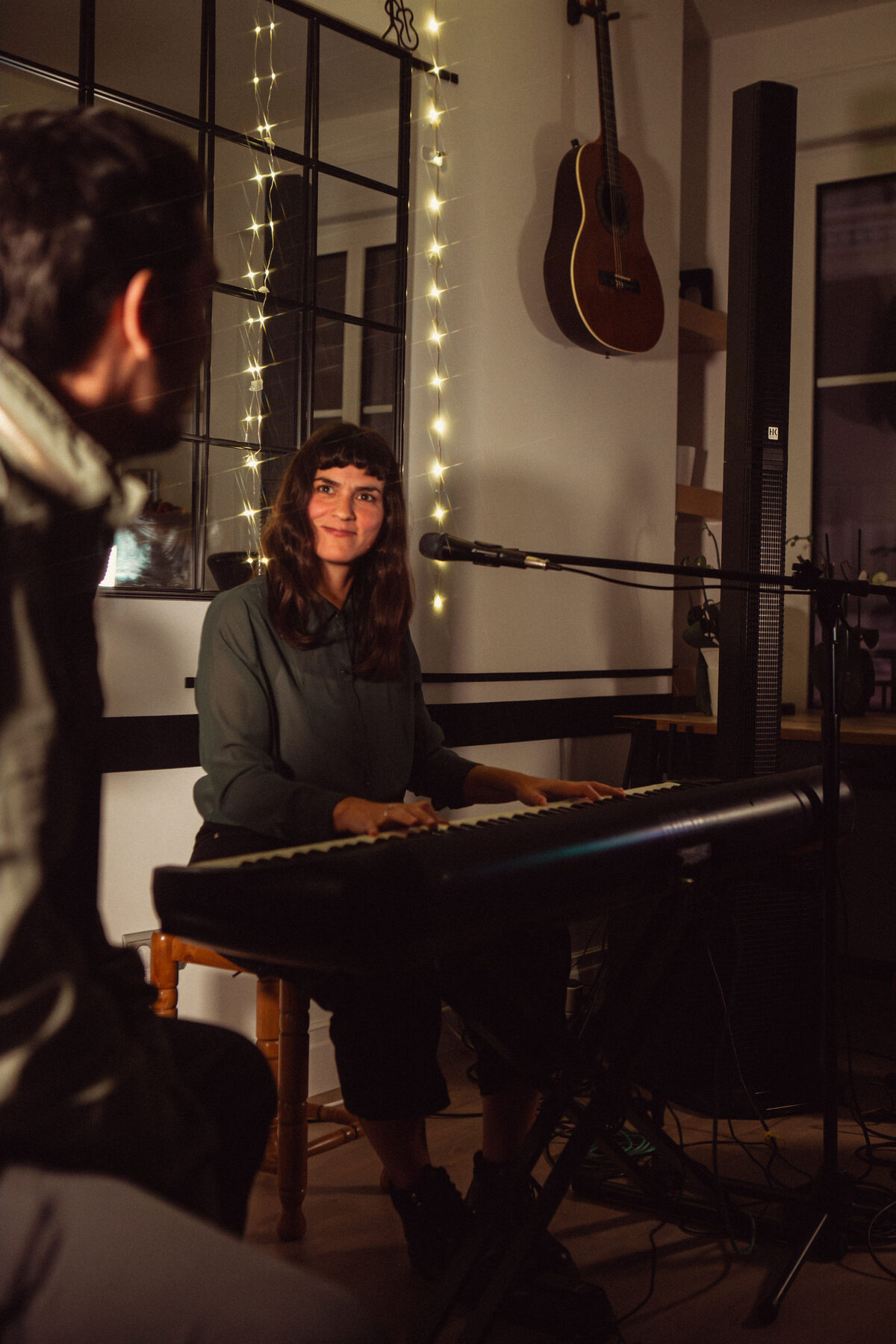
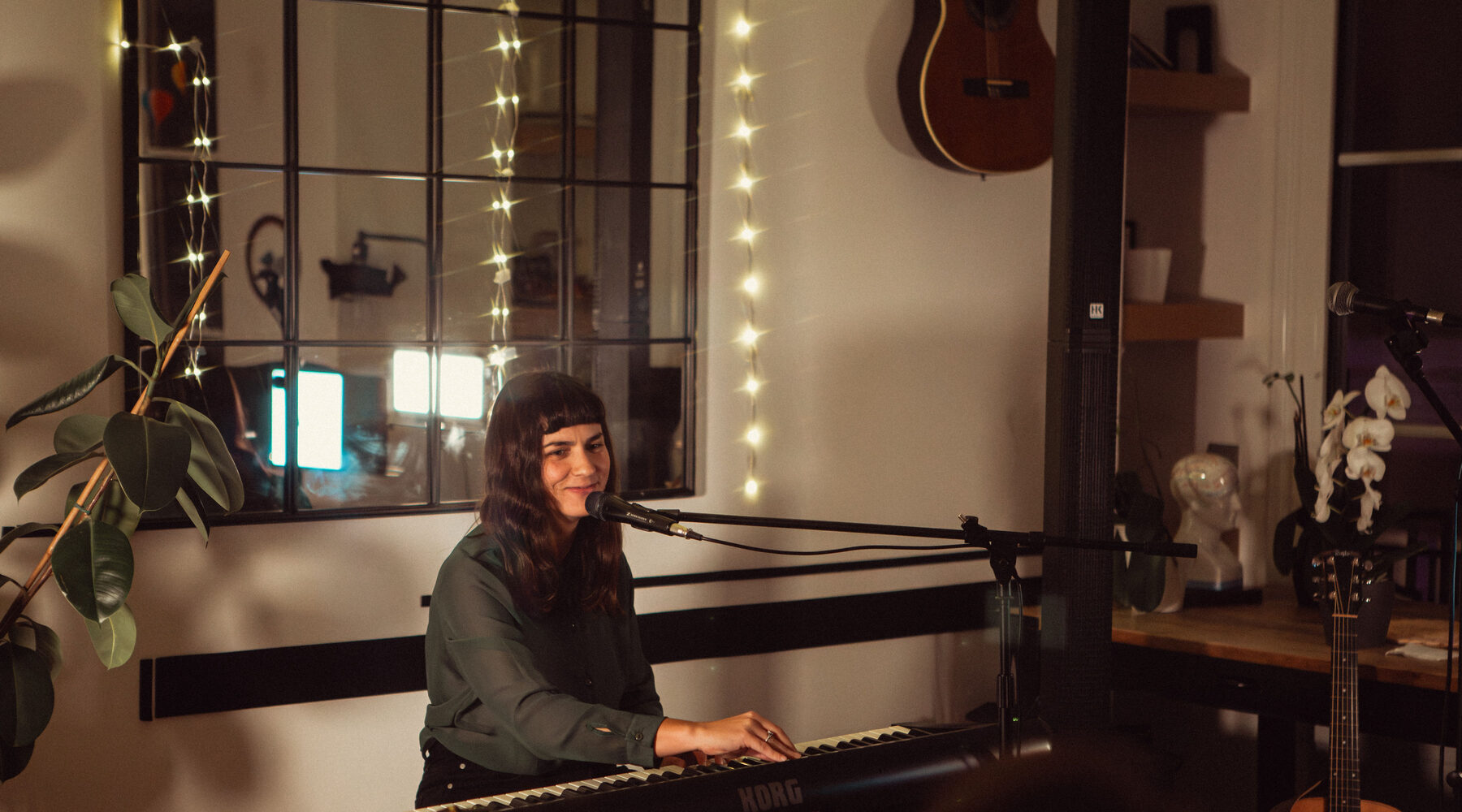
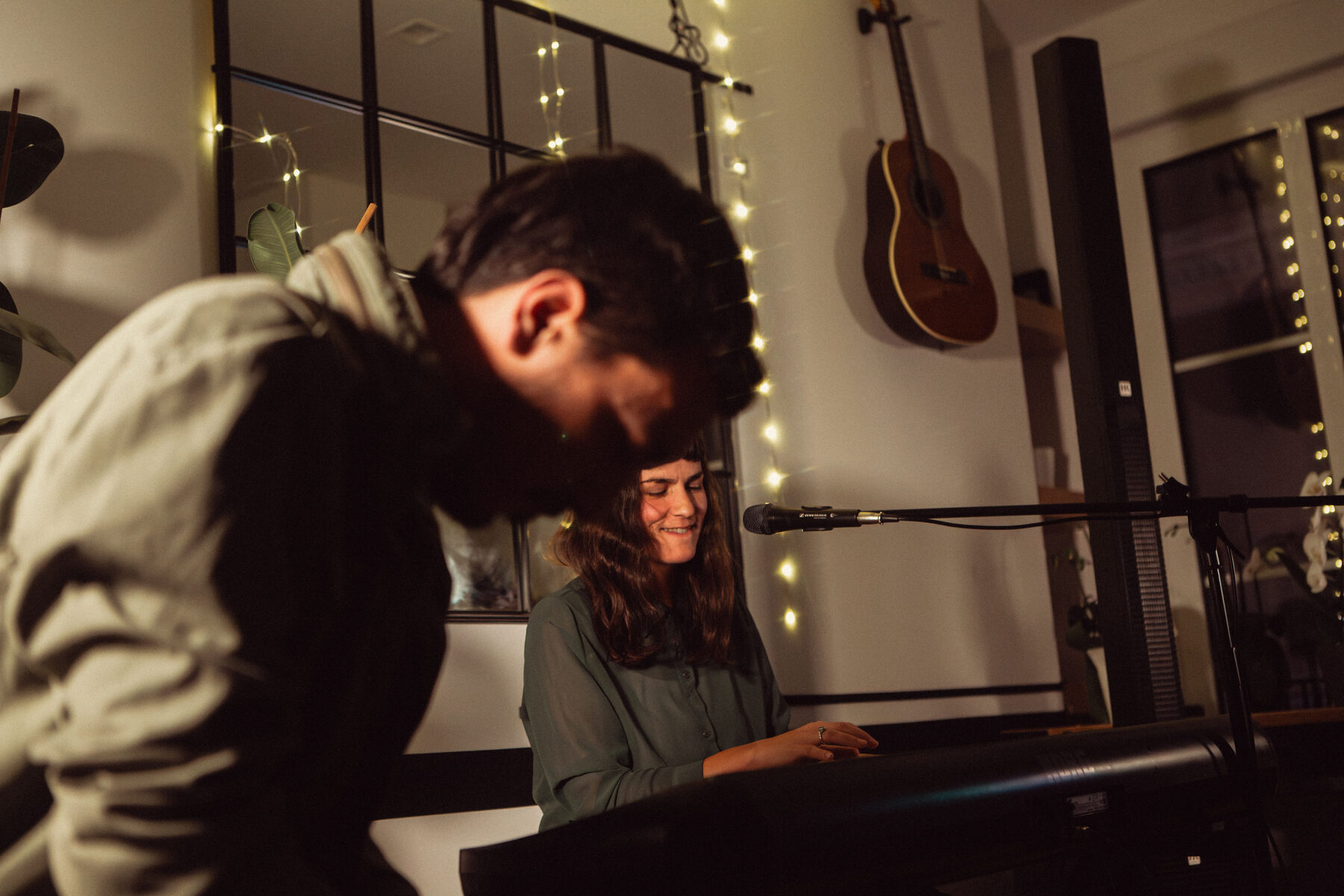
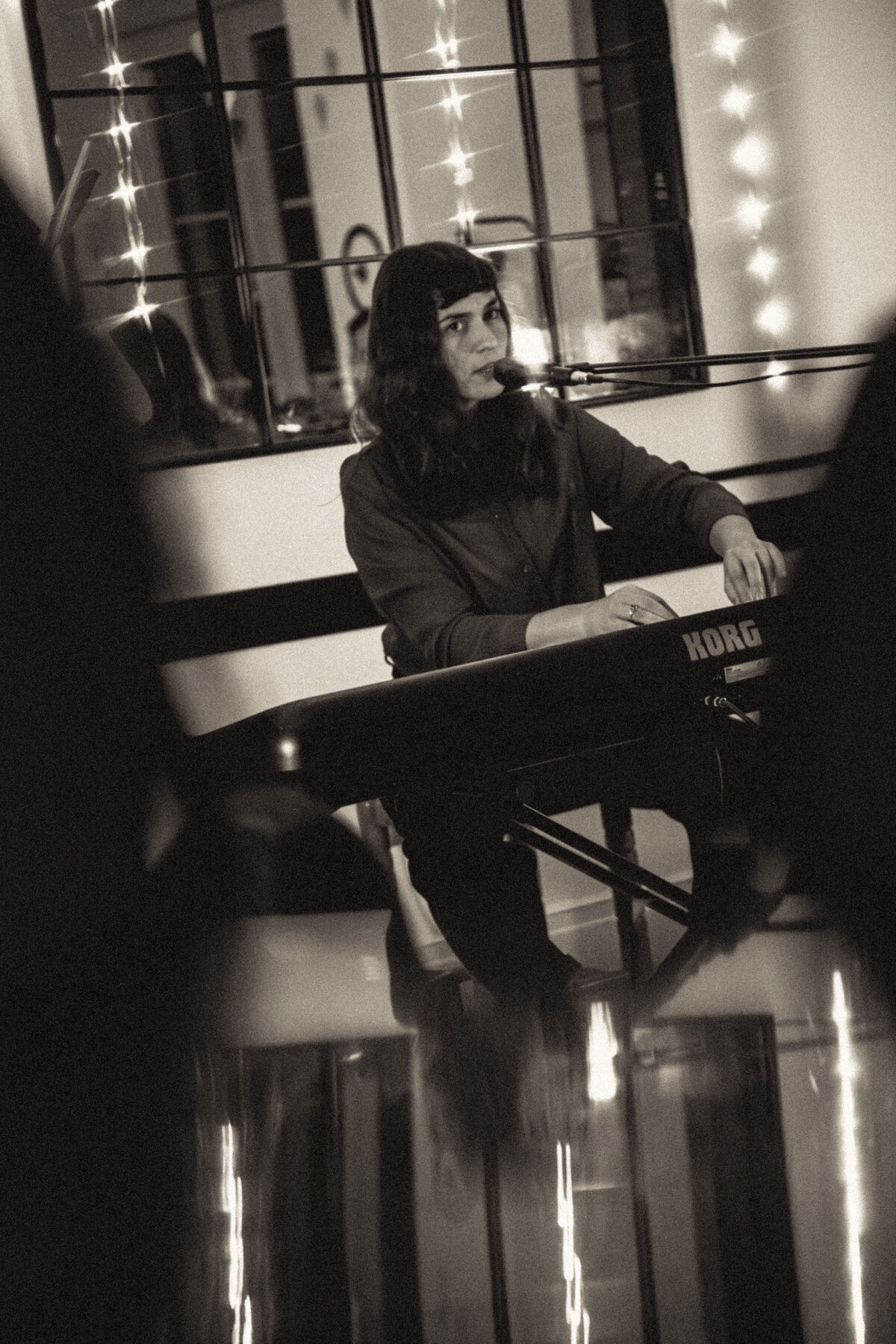
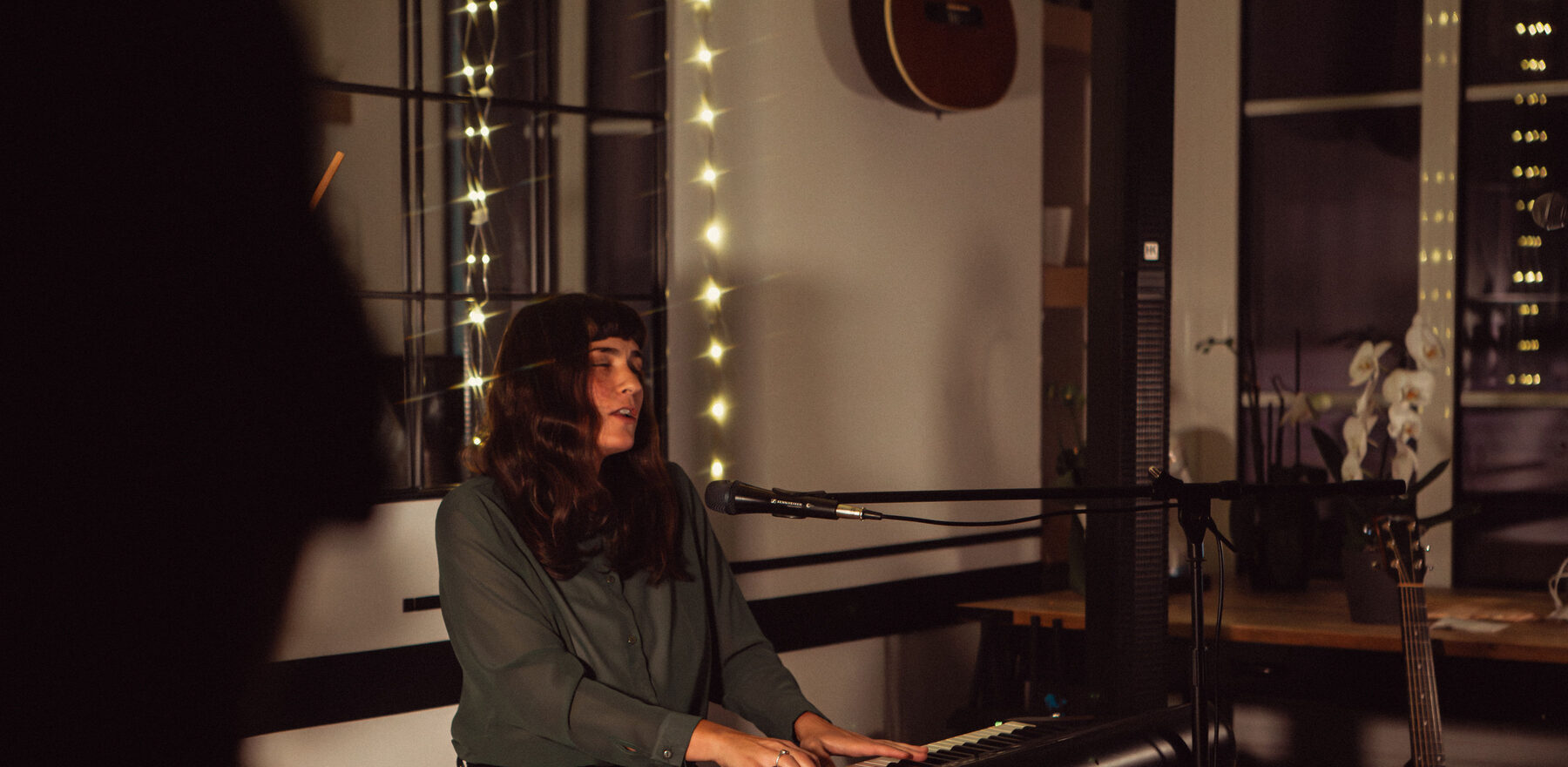
Not necessarily as a profession, but with discernment. You listen carefully. You value craft. You've always wondered what your voice could do in the right space. This Lab was made for you.
A starting point — we shape it together once the group is formed.
Don't speak Spanish, English or Portuguese fluently? That's not a barrier — it's part of the work. Singing is one of the fastest ways to absorb pronunciation, rhythm and intonation in a new language. Carolina has spent years teaching exactly this.
Before we begin — Voice Meeting with Carolina. Not an audition, a conversation.
Each edition is self-contained — 6 group sessions and 1 private lesson, scheduled individually. 8 to 10 people.
6 group sessions (closing session is recorded) + 1 private lesson scheduled individually.
6 group sessions (closing session is recorded) + 1 private lesson scheduled individually.
Those who complete September get priority access to November — and to everything that comes next.
Carolina reads every application personally. If it feels aligned, you will be invited in.
Short, no pressure. Tell us what brings you here.
In person or video call. Not an audition, a conversation. Carolina does the rest.
If it's a good fit, Carolina confirms your place. Welcome.
Takes 2 minutes. Carolina will be in touch within 48 hours.
If this level of structure doesn't feel right for you right now, there are other ways to experience music with us. Carolina also designs lighter musical experiences for friends, families and teams — more informal, more playful, no commitment required.
Carolina also creates private musical experiences for companies, families, and celebrations — from team choirs to curated concerts. Available year-round, tailored to your group, your music, your occasion.
Enquire via WhatsAppLima, 1979. Carolina grew up in a Lima where music didn't exist in her social world — not because there wasn't talent, but because the circles she was born into simply didn't make space for it. Her first contact came through church, through composing alone in her room, through her grandmother's guitar that she taught herself to play at 12. Composing was how she survived the world.
At 16, she sang in her school choir and discovered something she couldn't name yet. When she graduated, the choir was gone. So she built one herself.
She co-founded Coro Arpegio with Mónica Gastelumendi — a women's vocal ensemble that would go on to win a Gold Record, perform at the Presidency of Peru, and tour Washington D.C. and New York. Thirty years later, Coro Arpegio is still active.
At 17, she placed an ad in a Lima newspaper looking for musicians. Musicians arrived from every corner of the city — from neighborhoods and backgrounds she had never encountered. The best saxophonist was the son of her aunt's housekeeper. In that room, her understanding of the world shifted permanently. She stopped seeing through her eyes. She started listening.
That same year she founded Jazz Jaus — a youth music project bringing together young musicians from across Lima, united by music as a message of integration. She was 17.
From 1997 to 2001 she studied psychology at university in Lima — while running Jazz Jaus, directing Coro Arpegio, and teaching. In 2001 she picked up the saxophone for the first time.
Less than a year later, she left for the University of North Texas (UNT, USA). People told her she was crazy. She arrived with less than a year of saxophone. She practiced eight hours a day. There were days her mouth bled. More than once, a professor told her: "Carolina, go back to psychology. Go back to Peru."
She didn't. "Every time they told me to go back, I practiced more."
She completed the degree in three years. From Texas she went to New York — two more years immersed in the city's musical world.
Then came Susana Baca — three Grammy Latinos, the defining voice of Afro-Peruvian music. Under her mentorship, Carolina immersed herself in the music of Peru's central coast and the Valle del Mantaro. She worked with Baca for nine years. She also worked with the BID and the Prince Claus Fund, bringing music to nearly 800 children across four provinces of Peru.
In 2014 she released Bloom — what began as an instrumental record became songs. Her essence in soul.
In 2019 she completed her Master's degree at Berklee College of Music and performed at BBC London, the Valencia Jazz Festival and EXIB Festival in Portugal. She moved to Madrid. She built Casa Corah.
And then, after eight years away from directing, she came back. Not because she had to. Because she was finally ready.
"This is what happens when 30 years of music, psychology, community and craft come together in one intimate room."